

February 5, 2026 · 7 min read
Step 1: Add Up Your Real CFM Demand
List every air-using tool, cylinder, or piece of equipment and its CFM rating at the pressure you actually run. Then multiply by an honest utilization factor. A grinder that runs 20 percent of the shift only draws 20 percent of its rated CFM on average.
Do not just add up peak CFM for every tool at once unless every tool actually runs at the same time. Most plants overshoot demand by 30 to 50 percent this way.
Step 2: Nail Down the Right PSI
Find the highest-pressure tool in the plant. If one machine needs 110 PSI and everything else needs 90, you have two options: raise system pressure for one tool (expensive) or add a small booster for that tool (usually smarter).
Every 2 PSI of extra system pressure costs about 1 percent more electricity. Do not oversize pressure just to be safe.
Step 3: Match the Duty Cycle to the Machine
Reciprocating compressors are typically rated 60 to 75 percent duty. Rotary screws are 100 percent duty. If the plant runs air more than about six hours out of every eight, go rotary screw.
Step 4: Size Storage (Receiver Tank)
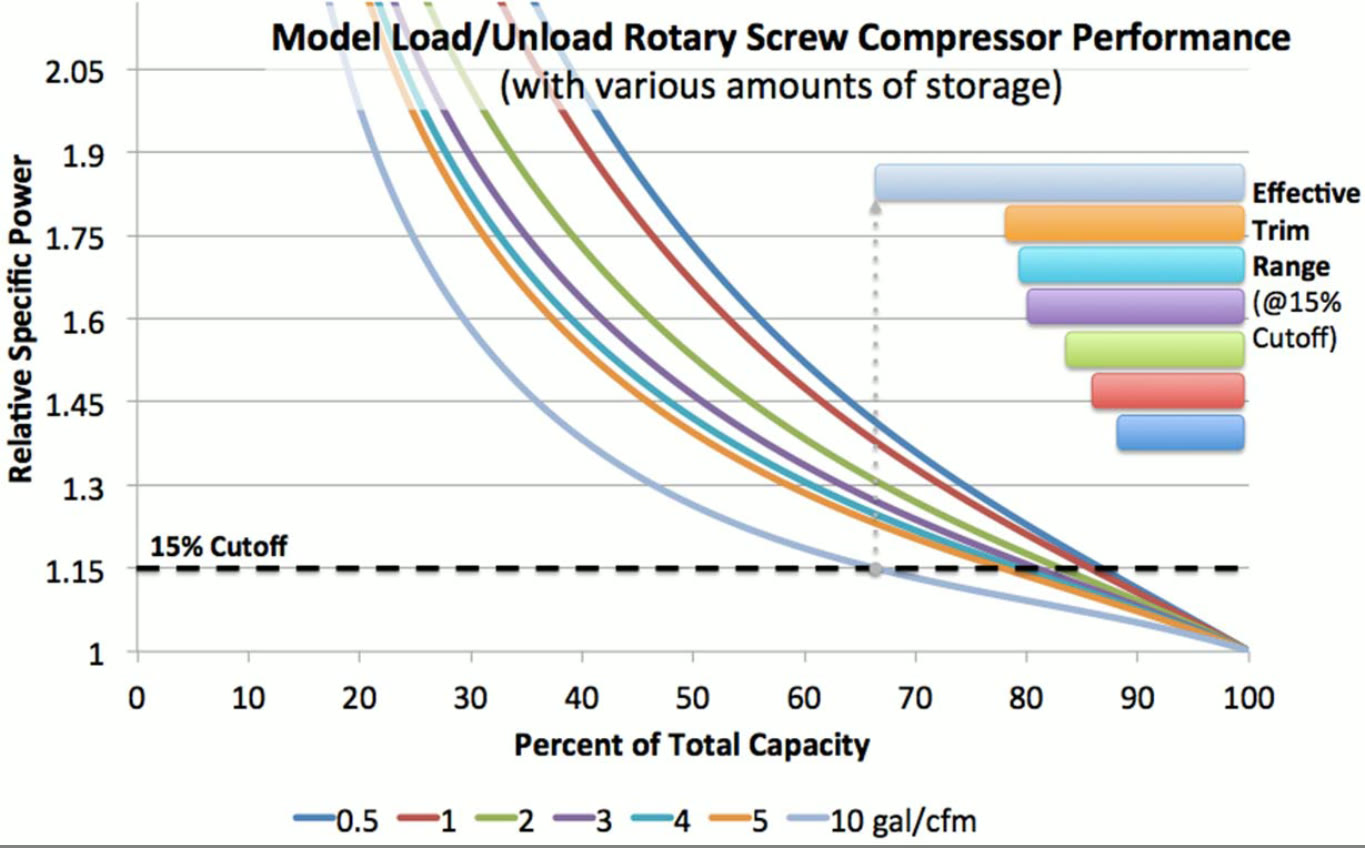
A common rule for rotary screw systems is 3 to 5 gallons of receiver per CFM. For reciprocating, 1 to 2 gallons per CFM is usually enough because they cycle on and off.
Bigger storage smooths out demand spikes, cuts short-cycling, and lets a smaller compressor handle a bigger plant.
Step 5: Plan for Growth and Backup
Add 20 to 30 percent headroom for a new production line, a second shift, or a leak that has not been fixed yet.
If a compressor going down stops production, plan for redundancy: a second smaller unit, an emergency rental agreement, or a shared backup with a nearby facility.
- Common shop sizes: 5 to 15 HP, 20 to 55 CFM at 125 PSI
- Small production: 25 to 40 HP, 100 to 175 CFM
- Mid-size plant: 50 to 100 HP, 200 to 475 CFM
- Large plant: 125 HP and up, often in multiple units for redundancy
Get an Honest Answer
A ten-minute conversation and a walk of your plant beats any online calculator. We size compressors the way a mechanic would, not the way a salesperson would.