
March 5, 2026 · 7 min read
Start With The Room, Not The Compressor
The biggest install mistakes happen before the compressor shows up. If the room cannot reject the heat the compressor makes, cannot get service access, and cannot drop condensate to a floor sink, the machine will run hot and fail early - no matter how good the equipment is.
A right-sized room has intake louvers on one wall, exhaust on the opposite wall, three feet of service clearance around each machine, a floor drain, and a wall or slab that can carry the vibration.
Get The Equipment Sequence Right
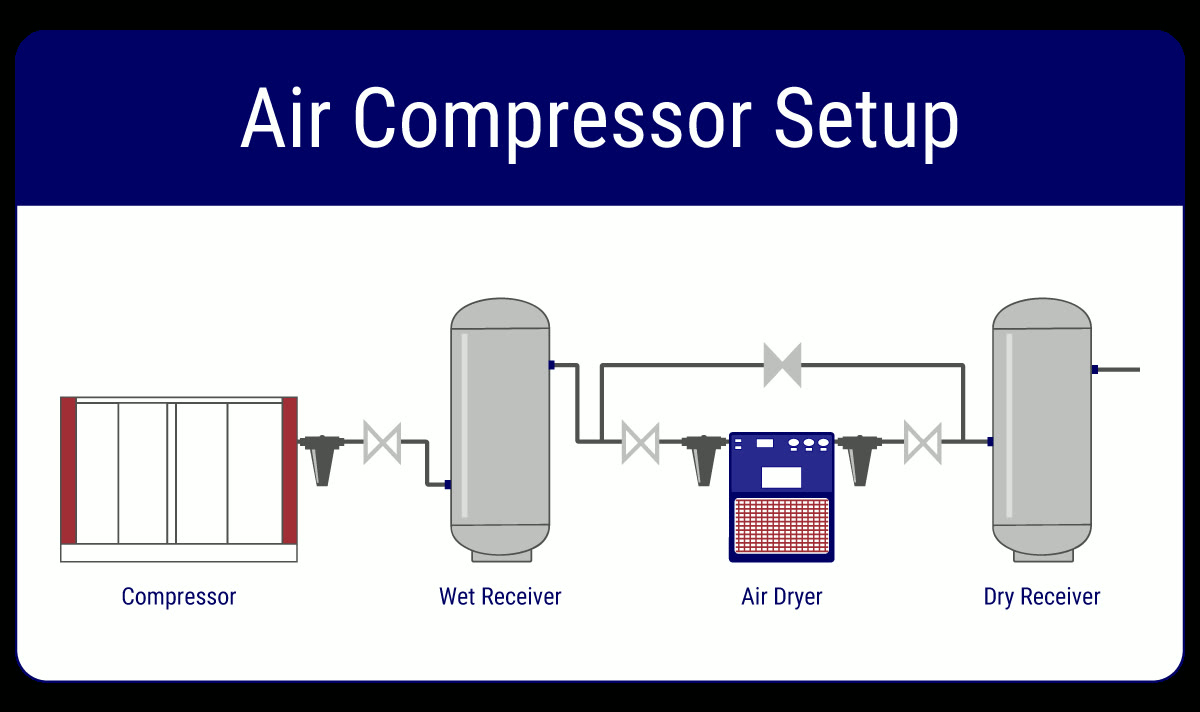
Air leaves the compressor hot and wet. The equipment order determines whether that moisture ever reaches your tools. The correct sequence for a rotary screw plant install is: compressor > aftercooler > wet receiver > refrigerated (or desiccant) dryer > coalescing filter > particulate filter > dry receiver (if used) > header out to plant.
Skipping the wet receiver in front of the dryer is one of the most common shortcuts we find. It floods the dryer with slugs of water and shortens its life.
- Wet receiver upstream of the dryer catches bulk condensate and gives the compressor a place to unload.
- Dryer sized to peak CFM at the actual inlet temperature the compressor delivers, not the brochure rating.
- Filters after the dryer, sized for the pressure drop budget of your header (usually under 5 PSI total).
Electrical & Disconnects
The electrical scope is often what causes install delays. A rotary screw compressor needs a properly sized disconnect within sight of the machine, correctly sized wire for the FLA, and a starter or drive matched to the motor.
For dryers, VFDs, and controls, you need dedicated circuits - not a shared feed that trips when the compressor starts.
Want a full turnkey scope - equipment, electrical, and piping - as one quote?
Get an install scopeCondensate & Drains
Every install produces condensate: at the aftercooler, at the wet receiver, at each filter, and at the dryer. Manual petcocks that never get cracked open are a leading cause of contaminated air downstream.
Use zero-loss electronic drains routed to an oil-water separator, then to a floor sink. Skipping the separator can violate local discharge rules for oil-lubricated compressors.
Startup, Commissioning & Handoff
A real install ends with commissioning, not with the delivery truck leaving. That means: verified rotation, measured amp draw at full load, measured pressure drop across the dryer and filters, condensate drains cycling, and a printed startup report.
Then we hand off documentation - drawings, model and serial numbers, PM schedule, spare parts list - and roll straight into a preventive maintenance plan.