March 19, 2026 · 6 min read
The Correct Sequence (And Why Order Matters)
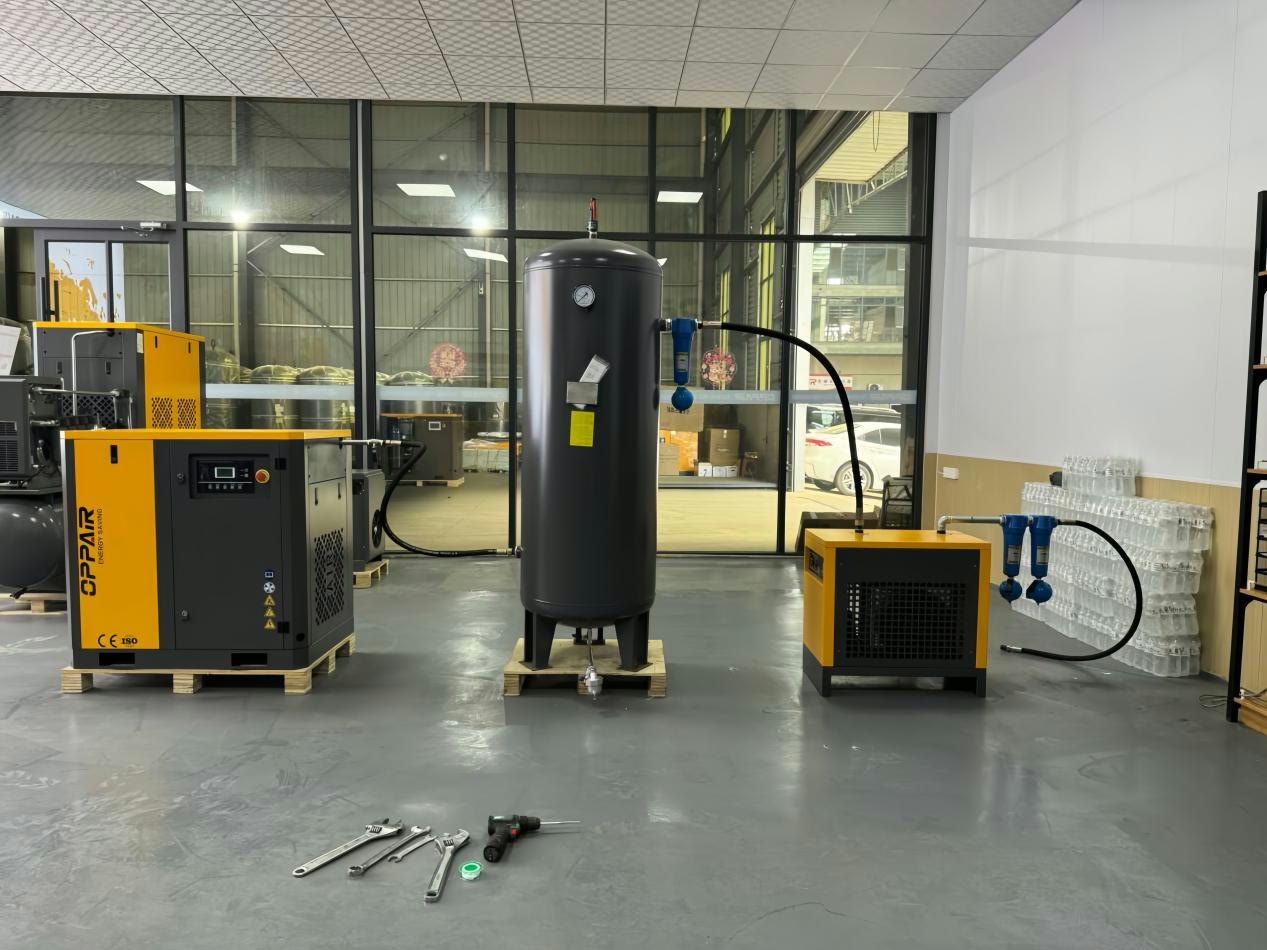
For a rotary screw compressor, the correct order is: compressor > flex hose > wet receiver > refrigerated dryer > coalescing filter > particulate filter > header out to plant.
The wet receiver upstream of the dryer is not optional - it lets the compressor unload against storage, catches bulk condensate before it hits the dryer, and cools the air enough for the dryer to work.
Skipping the wet tank sends 180 F saturated air straight into a dryer rated for 100 F inlet. The dryer cannot keep up, dew point climbs, and water shows up at your tools.
Sizing Storage For The Dryer
A rule of thumb: 3 to 5 gallons of receiver capacity per CFM of compressor output. For a 100 CFM compressor, that is a 300 to 500 gallon tank if you have room, or a 240 gallon minimum.
More storage means fewer load/unload cycles, cooler air entering the dryer, and stable pressure downstream when a big tool kicks on.
| Compressor CFM | Minimum Wet Tank | Recommended Wet Tank |
|---|---|---|
| 25 - 50 CFM | 120 gal | 240 gal |
| 50 - 100 CFM | 240 gal | 400 gal |
| 100 - 200 CFM | 400 gal | 660 gal |
| 200 - 400 CFM | 660 gal | 1,060 gal |
Bypass Loops And Isolation Valves
Every dryer, every filter bank, and every dry receiver should be piped with a three-valve bypass. Two isolation valves let you close off the equipment for service, and a bypass valve lets air still flow past it to the plant.
Without a bypass, changing a filter element means shutting down production. With a bypass, it is a five-minute job.
Want it all sized and quoted together, with the bypass and drains done right?
Quote a dryer + tank + filter packageFilter Placement And Pressure Drop Budget
Filters live after the dryer, not before. A coalescing filter takes out oil aerosols and moisture carryover; a particulate filter catches solids downstream. Each clean filter costs about 1 to 2 PSI of pressure drop, rising as elements load.
Change elements when the differential pressure hits 5 PSI on a single filter. Neglected filters can push total system drop over 15 PSI - money out of your compressor motor every second.
Common Wiring & Piping Mistakes
The mistakes we find most often on plant walks:
- Hard-piped compressor discharge with no flex hose - vibration cracks the joint within a year.
- Dryer wired off the compressor starter, so it only runs when the compressor loads - dew point spikes on every cycle.
- Manual petcock drains that no one opens, filling the tank with water and dumping it downstream during load.
- Filters ahead of the dryer instead of after - coalescer floods and blows through.
- No union or shutoff at the dryer, so a filter change means a plant shutdown.